
Ethics education is more than lessons about right and wrong
At school, students learn more than mathematics, languages and science. They also encounter questions about right and wrong, responsibility, empathy and how people should treat one another. In a new doctoral thesis, Helena Anderström at Jönköping University (JU) examines how teachers work with ethics in primary school, particularly in religious education. The findings show that ethics is an important part of teaching, but also a challenge for teachers.
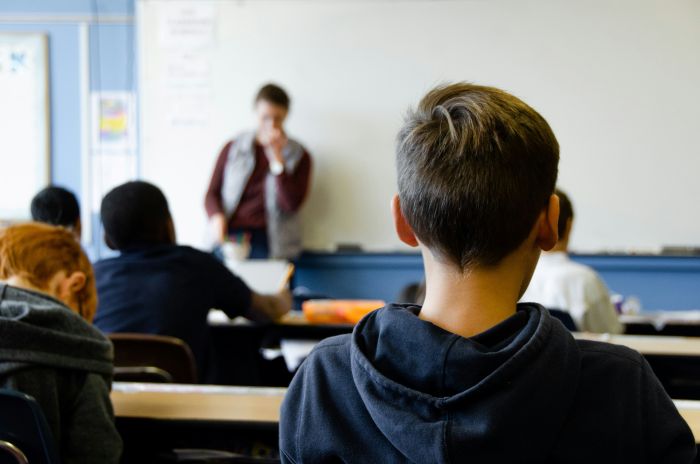
Picture: Taylor Flowe, Unsplash.
Helena Anderström has studied ethics education from several perspectives. Through interviews with teachers, analyses of the curriculum and classroom observations, she has explored how teachers talk about ethics, how the task is described in school policy documents and how ethics education is carried out in practice.
Ethical issues arise both in planned lessons and in everyday situations and interactions between students and teachers.
“Ethics education is about much more than discussing moral dilemmas. It is also part of the school’s everyday work with relationships, values and how people treat one another,” says Helena Anderström, lecturer and newly awarded PhD in Education at the School of Education and Communication at JU”.
Four aspects of ethics education
In her thesis, Helena Anderström identifies four aspects of ethics education in schools. These involve communicating the shared values of the school and society, developing students’ ethical thinking, strengthening their social skills and empathy, and giving them opportunities to develop their own ethical standpoints.
Teachers describe how students need tools to reason about difficult issues, understand other people’s perspectives and manage conflicts constructively. At the same time, schools are expected to promote democratic values, human rights and respect for the equal value of all people.
A difficult balancing act for teachers
Teachers see ethics education as an important part of their role, but also describe several challenges. One is finding a balance between conveying the shared values of society and the school while allowing students to develop their own personal ethical perspectives. At times, students’ values may conflict with the school’s fundamental values.
Another challenge is that ethics is described in broad terms in the curriculum. This gives teachers considerable freedom to interpret it, but also places responsibility on them to decide how ethics education should be carried out in practice. Several teachers in the study therefore call for more support and knowledge about how ethics education can be planned and delivered, and how the curriculum should be interpreted.
“Ethics education can give students the opportunity to develop empathy, judgement, ethical thinking and the ability to address ethical issues. At the same time, it is a complex task that places high demands on teachers’ pedagogical knowledge,” says Helena Anderström.


