
When dementia strikes in midlife
Developing dementia while still of working age changes life fundamentally. At a well-attended JU LIVE event, Jönköping University’s (JU) popular science lecture series, Fanny Kårelind spoke about how the condition affects younger people and their families.
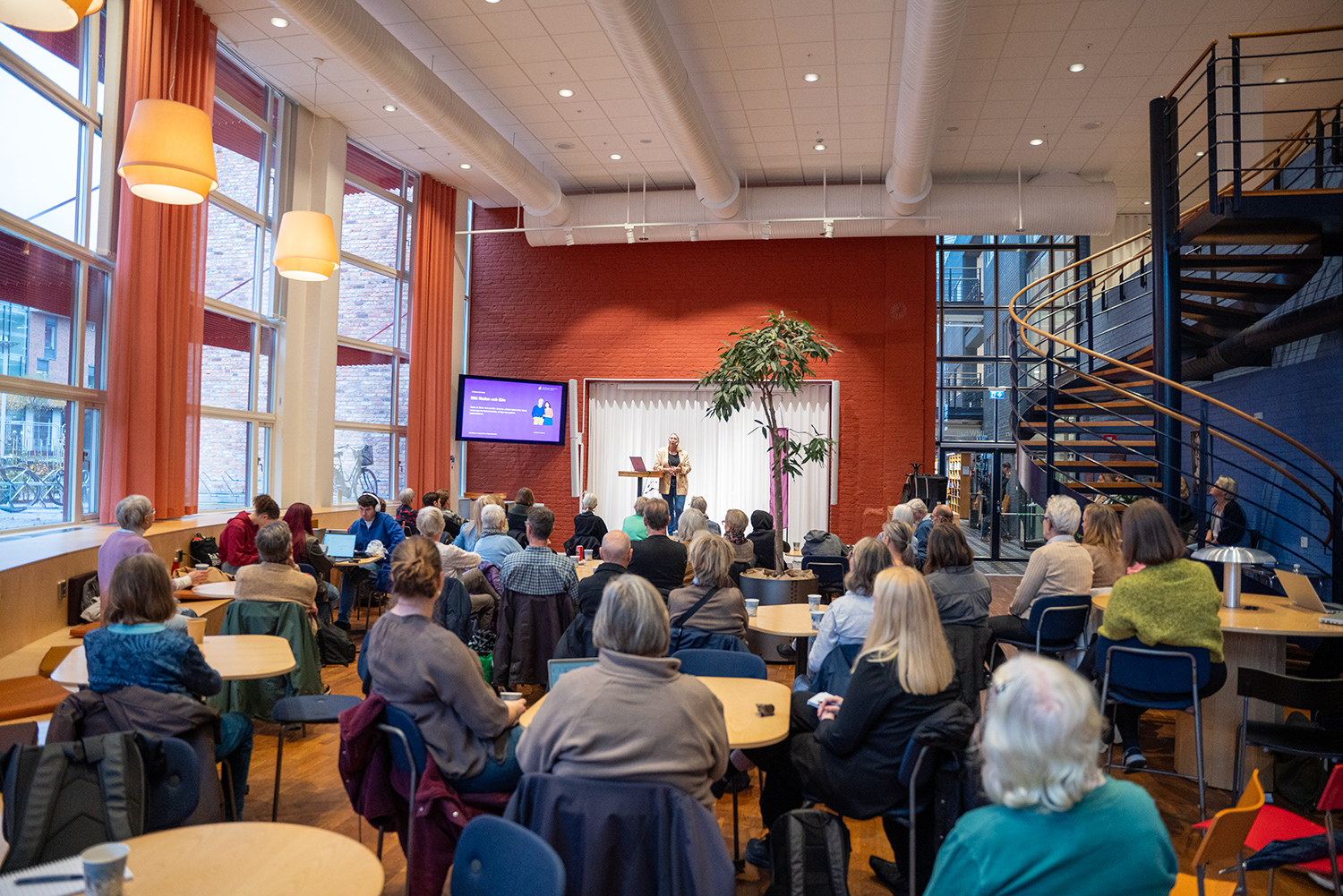
Around 10,000 people under the age of 65 in Sweden are living with dementia. When the condition develops during working age, it often occurs at a stage of life characterised by work, family responsibilities and social relationships. This makes the situation particularly challenging, not only for the person affected, but also for their partner and their everyday life together.
In her lecture, Fanny Kårelind, Lecturer at the School of Health Sciences at JU, used the example of a fictional couple based on real couples who took part in her research. Stefan is 58 and has developed dementia. His wife, Elin, is 55. The condition develops gradually: Stefan begins struggling to find words, misses meetings at work and is often tired and low in mood. At first, Elin thinks stress is the cause.
“Early-onset dementia often begins with low mood and changes in behaviour, not just memory problems. This means it can easily be mistaken for stress, burnout or depression. Symptoms may be noticeable several years before a diagnosis is actually made,” says Fanny Kårelind.
She went on to explain that when younger people, in this context meaning those under the age of 65, develop dementia, it strikes “in the middle of life”. Many people affected have to stop working earlier than planned or reduce their working hours. In many cases, their partner also needs to reduce their working hours to make everyday life manageable.
Many also have children who are still living at home, or parents of their own who are still alive and may also need care and attention.
“It is a condition associated with old age, but it comes at the ‘wrong time’ and disrupts both plans and a person’s sense of identity,” says Fanny.
Support is often designed around the needs of older people
Using Stefan and Elin as an example, Fanny also described shortcomings in the support available to younger people with dementia. Many support services are designed around the needs of older people and are therefore not always suitable for younger people with dementia. Day services and group activities may not be well suited to their interests, physical abilities and life circumstances. When meaningful activities are lacking, the risk of isolation and dependence on a partner increases. At the same time, couples constantly need to balance their need for support with their desire to remain independent.
Another problem is the lack of coordination between the region’s memory clinics and municipal support services. It can be difficult to know where to turn and who is responsible for what, which means that couples often have to coordinate the support themselves. Memory clinics, by contrast, are often perceived as providing a stable and consistent point of contact with healthcare, unlike the more difficult-to-navigate municipal support system.
Finally, Fanny highlighted four things that are needed to provide better support for couples such as Stefan and Elin:
- Early contact with health and social care services, with regular follow-up, even before support is needed.
- Activities and services suited to the person’s age, interests and life circumstances.
- A designated contact person and better coordination between healthcare services, the municipality and the Swedish Social Insurance Agency.
- Support that considers the family and the couple as a whole, rather than focusing solely on each individual separately.
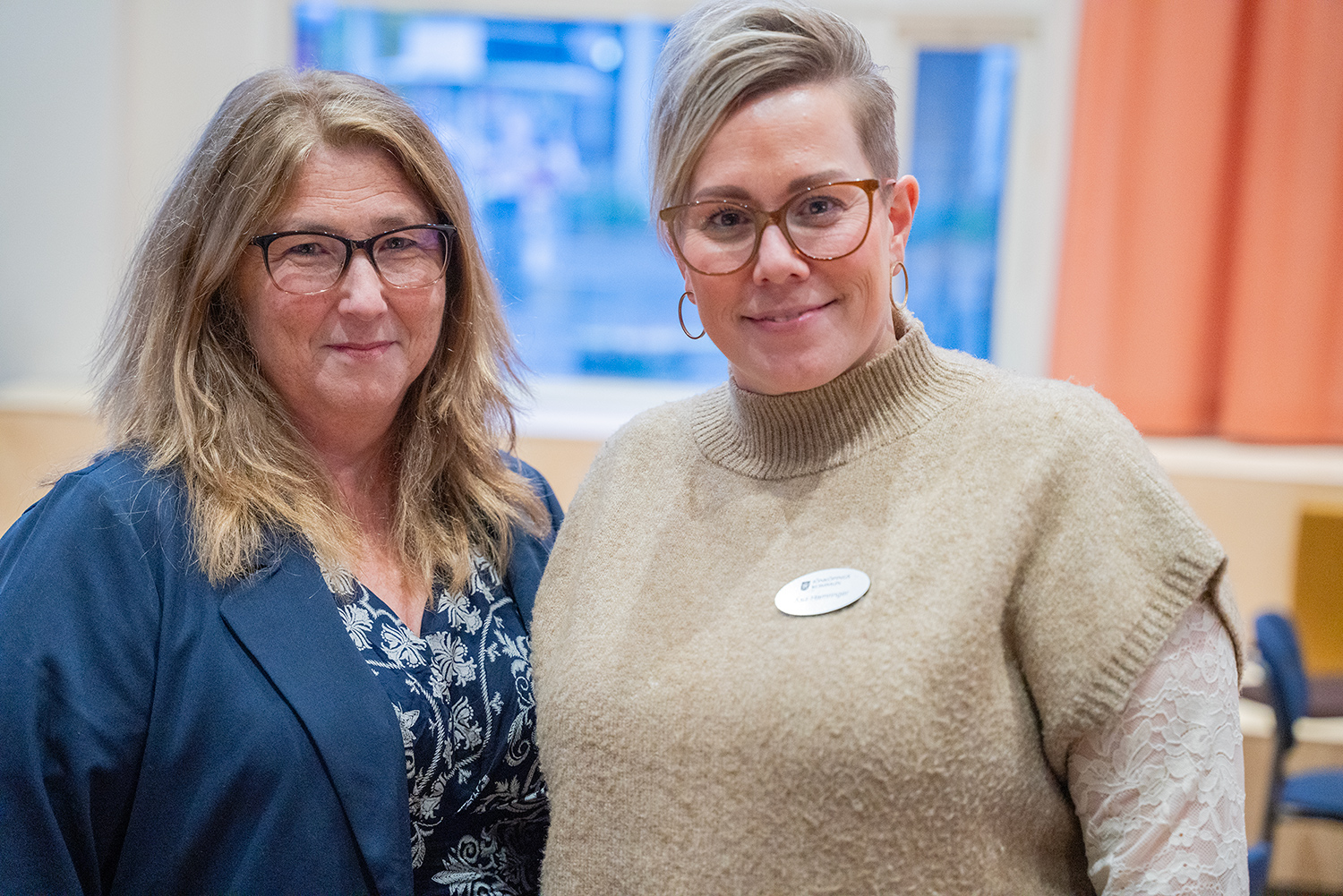
Marina Levinsson and Åsa Hamringer
Among those attending JU LIVE were Marina Levinsson, a unit manager in health and social care at Jönköping Municipality, and Åsa Hamringer, a dementia specialist nurse with the municipality. Both work specifically with day services for younger people with dementia. It was their first time attending JU Live.
“It’s a really good concept. It’s open and accessible,” says Åsa.
Åsa was also in contact with Fanny during the research project and acted as a sounding board.
“This research is incredibly important. We try as far as possible to incorporate research into our work and to make decision-makers aware of the research and what it tells us. More research is needed, including on how we can target support even more effectively,” Åsa concludes.
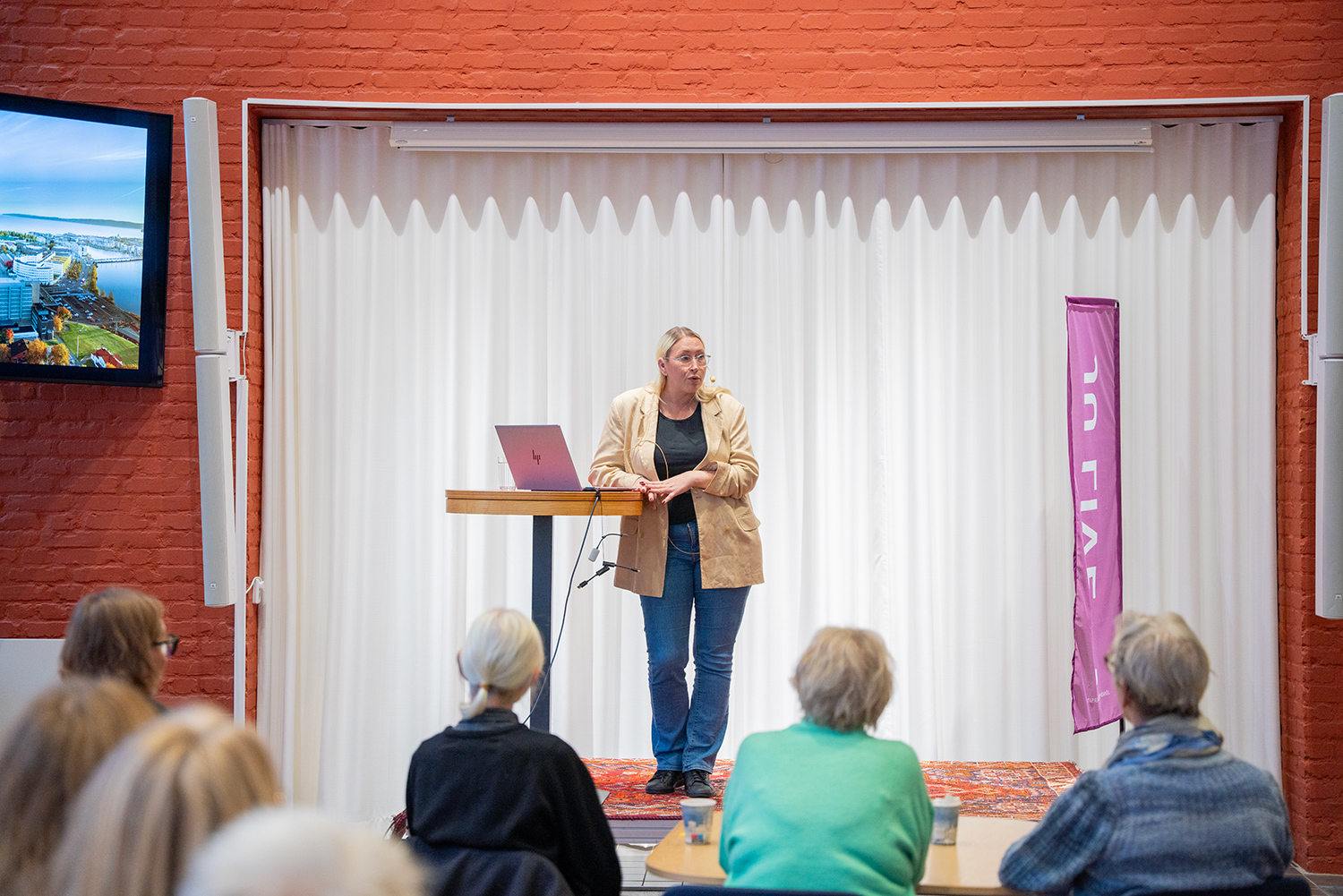
Fanny Kårelind


