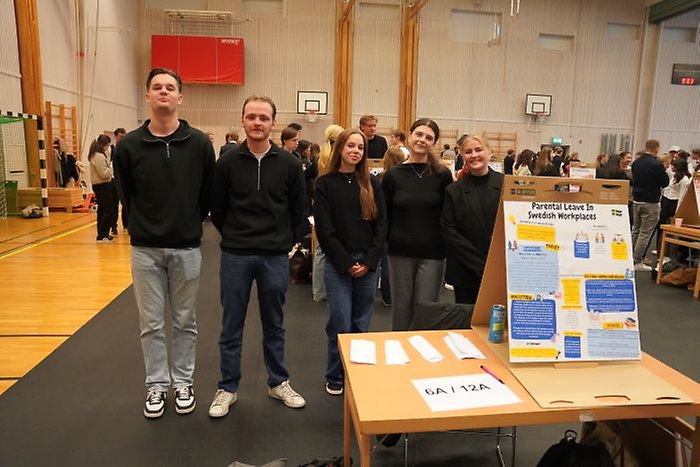
Cultural Business Fair highlights business cultures from around the world
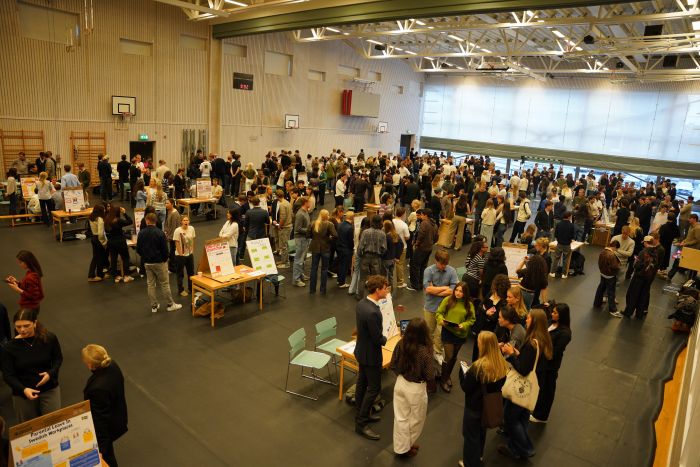
How does culture influence the way we do business, lead, collaborate, and communicate? Around 400 students explored these questions during the Cultural Business Fair, held at Campus Arena on 5 October. The fair was part of the course Navigating Academia and Business at Jönköping International Business School (JIBS), Jönköping University.
During the event, student groups presented business practices from different countries and cultures. Visitors, consisting of fellow students from the course, not only learned about these cultures but also experienced first-hand how meetings, decision-making, feedback processes, and manager-employee relationships can vary across cultural contexts.
"Navigating Academia and Business is one of two introductory courses for all undergraduate students. Participating in and presenting at the fair is an assessed component of the course and a creative way to examine such a large number of students. It is very well organized, and I would like to give special recognition to the team who organized the event," says Anna Blombäck, Associate Dean of Education at JIBS.
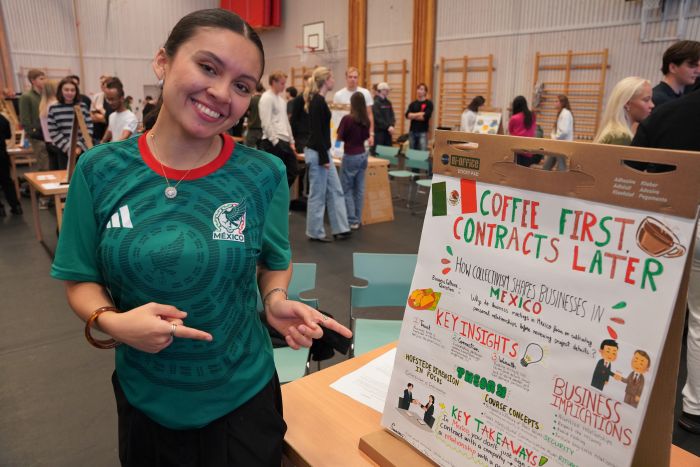
Victoria Francis, a student from Mexico, was part of a group that explored the importance of social relationships in Mexican business culture.
Cultural norms shape international business
Through practical examples, students demonstrated how perspectives on leadership, collaboration, and communication differ across regions of the world.
One student group examined the importance of social relationships in Mexican business culture.
"Our group has studied the significance of collectivism in Mexico. Relationships play a central role, and if you want to do business there, you are more likely to succeed if you first build strong personal relationships. It is important to take time to socialize, for example, over a cup of coffee. Being social and investing in your network often opens the door to more opportunities," says Victoria Francis, a student from Mexico.
Another student group focused on how Swedish companies approach parental leave.
"We have explored parental leave from several perspectives, including those of managers and colleagues, as well as from both male and female viewpoints. We also organized an activity featuring different scenarios to demonstrate in practical terms how parental leave works in Sweden. It is a fun and interactive way to share knowledge, and it fits very well here at JIBS, where students come from so many different countries," says Swedish student Leia Lindén.
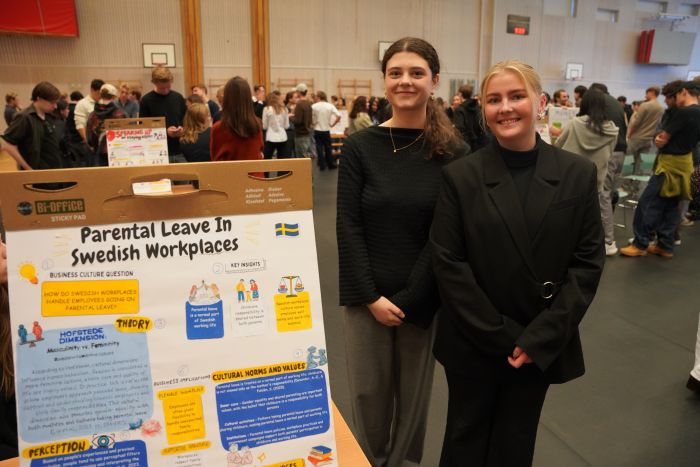
Aurora Zekaj and Leia Lindén (right) were part of a group that explored parental leave and its role in Swedish business culture.
A natural meeting place for different cultures
The Cultural Business Fair formed part of the course's focus on self-awareness, academic skills, and intercultural communication. With approximately half of the students coming from countries outside Sweden, the event also served as a natural platform for exchanging experiences and perspectives across cultures.
"I really like this concept. It is very interesting to gain insight into different cultures and see how much they can differ from one another. It is important to become aware of these cultural aspects. Socially, this is also a great activity because you really have to interact both with your own group and with other students. It increases understanding of other cultures," says Victoria Francis.
More pictures from the day: